

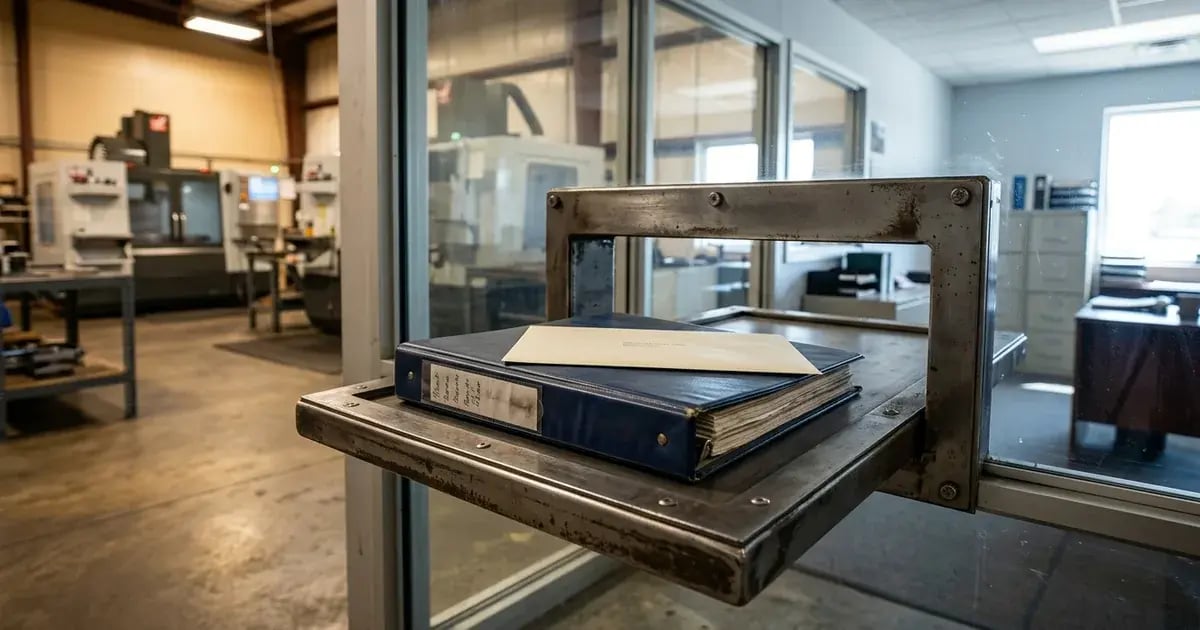
The letter arrives on a Tuesday, and it is better than the last three. It names two of your products correctly. It mentions the plant expansion you did in 2019, which means somebody read something real. It proposes a range, not a number, and it says the writer would like to visit and see the operation for himself. It closes by saying he knows you probably aren't looking to sell, which is the part that makes you keep reading.
So you do the natural thing. You start grading the range, and you start grading the man.
But neither tells you what you need to know first. Before you grade the man or the range, ask whether the money behind the letter already exists.
Why the unfamiliar buyer is now the ordinary one
There is a category of buyer who has no fund. He has a thesis, some track record, a few relationships with lenders and family offices, and a plan to raise the equity and debt for your deal specifically, after you've agreed on a price. Giff Constable's guide for Axial defines the model plainly: an independent sponsor raises funds for the deals on a deal-by-deal basis instead of a pool of committed capital.
On Axial's own platform, this is no longer an edge case. Kaitlinn Thatcher's 2025 report records that independent sponsors accounted for 27% of closed deals on the Axial platform, compared with 20% for private equity funds. That's one platform, not the whole market, and it says nothing about the mix of letters in any owner's inbox. It does show that deal-by-deal buyers are a material part of lower-middle-market transactions.
What "raising after signing" actually does to you
Anybody who has sold a house understands the shape of this. You accept an offer, you take the sign down, and you start packing. Then the appraisal comes in low and everything goes back on the table. The lender will only finance its own view of the house.
An acquisition works the same way and takes longer. Between the letter of intent and a closing, a deal-by-deal buyer has to go get the money. That means converting what he saw on your floor into a document that a credit committee and a set of equity co-investors will fund, on a schedule he does not fully control. He can believe every word you told him. His lenders and investors still need records they can underwrite.
What changes after you sign is the audience for your records. For 20 or 30 years, that audience has been you, plus a controller who knows which numbers you correct in your head and an accountant who accepts the corrections. After you sign, it includes people who have never set foot in your plant. They can only underwrite what the records show, so every number that needs your explanation looks riskier.
What the financing group can actually use
Read each report as if you weren't there to explain it.
Start with gross margin by job. A reviewer will want to see whether the margin you quote survives setup time, scrap, rework, the overtime you ran to hit a date, the expedite freight you ate to keep a customer whole, and the secondary operation you sent out. Backlog is next, and a number by itself proves very little: a stranger wants age, margin, release schedule, and some reason to believe the plant can actually ship it. Inventory has to come apart into raw, work in process, finished, obsolete, and the stock that belongs to your customer and was never yours to count. Maintenance history has to exist per asset rather than per person, which is the hardest one, because in most plants the maintenance history is a guy named Ray who has been here since 1994 and knows which press needs the shim. Routings and standards have to describe what the floor actually does, not what somebody typed in when the system went live.
Ask an owner how he knows a particular job made money and he may answer from memory, right down to the week the material came in soft and scrap ran high before the vendor made it right. The answer may be completely correct.
You cannot send it to a credit committee.
Most owners have never had to prove their earnings to somebody who wasn't in the building, so decades of operating fluency don't automatically help with this part.
The fix is usually smaller than owners expect. Post labor and material against open jobs as the work happens instead of reconstructing it at month end. Reconcile job-level margin to the general ledger monthly, and spot check a handful of jobs against actual hours and material issued. Keep maintenance history organized by asset. The controller owns this, with the plant manager and the maintenance lead. Don't hire a consultant for this, and don't put yourself in charge. The point is to get you out of the explanation path. If the reconciliation doesn't agree, the record isn't readable by a stranger yet, and you've learned that on your own clock instead of somebody else's.
The controller can begin with reports the business already has and make the reconciliation part of the monthly close.
A strong buyer can still have a financing gap
None of this means the buyer's capital is second-rate. We've argued the opposite in these pages, that deal-by-deal capital buys businesses traditional private equity cannot, and we still think that's right. The buyer without a fund may be an operator who understands the floor, spends real time in the plant, and can consider a business a committed fund's process would screen out. He may well be the better owner. The buyer may fit your company well. His financing process will still test your records after signing.
Fewer sponsors are being asked for pre-signing capital support than in 2023, according to Thatcher's report. At the same time, one advisor quoted there states a preference for private equity and strategic buyers, citing concerns about waiting for capital to be secured. The market is getting more comfortable with deal-by-deal buyers. It has not stopped asking whether they can close.
You still need to judge the buyer and the odds of closing separately. An excellent buyer may be waiting on an answer he doesn't control. Some owners distrust the whole category. Others get charmed and decide the financing questions would be rude. Neither tells you whether the money is committed.
If a buyer's capital partners won't support the headline price, the buyer may try to bridge the difference with structure, including an earnout. We've written about how earnouts work. It's worth reading before somebody offers you one.
What to do before you sign anything
Do not rebuild the plant. Do not start an ERP implementation, a quality initiative, or an automation project because you got a letter. Starting a major implementation during a live process gives the reviewer a moving target. For a while, even you won't have clean comparable numbers. Don't certify anything you wouldn't have certified anyway.
Do two things instead. Make the short list of records that currently need your narration able to stand on their own, which for most plants is job-level margin, maintenance by asset, and backlog with real dates against it. And ask the buyer, early and without any apology in your voice, how the equity and the debt are committed and what's still conditional. Ask who has signed for what and what still has to happen before the money is available. Serious buyers hear these questions all the time. If someone avoids them, factor that into your view of the process.
For the fuller treatment of sale readiness, see our founder's guide to selling a manufacturing business.
What the records need to show
The owner at the machine may still know the margin from memory and get it exactly right.
Nobody in this process is asking whether the plant works. The plant works. Your customers have known it for 20 years and the buyer figured it out on his first walkthrough. The financing group needs the records to make the same case without you there.
At least a home appraiser walks through the house. Most of the people deciding whether this acquisition gets funded will never see the plant.
That matters after the transaction, too. If the numbers only make sense after you explain them, buyers and lenders will put a risk adjustment on them. The records need to be good enough that they stop calling you every time a number looks off.
If you're holding a letter and want to think out loud about what's behind it, Start a Conversation.
Buy. Build. Compound.
Sources
- The Independent Sponsor Model: The 101 Guide, Giff Constable, Axial
- Axial's 2025 Independent Sponsor Report, Kaitlinn Thatcher, Axial
- Why independent sponsors can buy businesses private equity cannot, HarborWind (internal)
- Founder's guide to selling a manufacturing business, HarborWind (internal)
- Earnout explained: manufacturing, HarborWind (internal)